SUPPORT





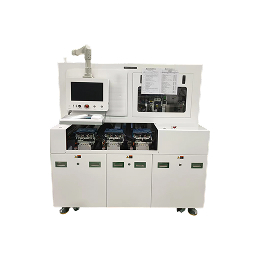
Lamination Process
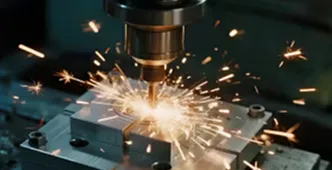
Screw Fastening/ Welding Process
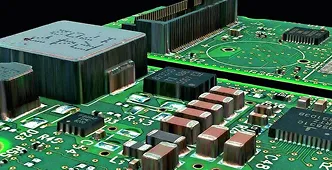
Automated Optical Inspection
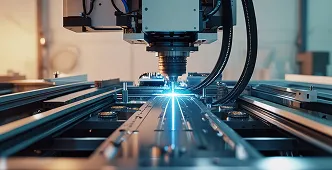
Non-Standard Process

About Us

Project Process

Support
 EN
EN

Customized Service
Targeting 3C, new energy, automotive electronics, medical equipment, and aerospace enterprises, we provide customized solutions and equipment tailored to their unique needs and specific issues.

New Energy

Automotive
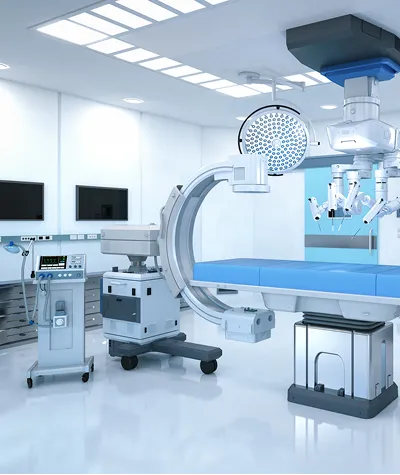
Medical

Aerospace
Customization Process
Customer Consultation
Requirements Communication
Scheme Design And Review
Scheme Design And Review
Production
Delivery
After Sales Service

ODM/OEM

As a leading provider of automation technology and manufacturing services, we provide global customers with full process ODM (Original Design Manufacturing) and OEM (Original Equipment Manufacturing) services from conceptual design to mass production. With over 20 years of experience in the field of automation, we help our partners quickly implement products, reduce research and development costs, and seize market opportunities.
Technical Support

It has offices in multiple locations across the country, covering major regions nationwide, and provides real-time remote cross-border services through the Industrial Internet.
After-Sales Service

A professional after-sales service department is available 24/7 to provide immediate response and emergency service; the equipment comes with a one-year free warranty; and the product offers lifetime technical support and upgrade services.
Download
FAQS
Common Problems And Solutions Of Vacuum Bonding Machine

1. Insufficient vacuum degree:
Reasons: Poor sealing of the sealing cylinder, vacuum pump failure, pipeline leakage, low atmospheric pressure in high-altitude areas;
Suggestion: Check the sealing performance of the sealing cylinder, inspect the vacuum pump and pipelines, and refer to the instructions for using the vacuum gauge to adjust (expected adjustments should be made in high-altitude areas);
2. Poor adhesion:
Reasons: insufficient pressure, insufficient temperature, poor materials;
Suggestion: Adjust pressure and temperature parameters, check material quality;
3. The device cannot break the vacuum:
Reason: The small battery valve is damaged or aging;
Suggestion: Replace the battery valve with a new one;
4. Vacuum cylinder does not descend:
reasons: sensor interface problems, cylinder abnormalities, vacuum pump failure;
Suggestion: Check the sensor connection and cylinder status, manually check if the cylinder descends normally, and check the working status of the vacuum pump;
Common Problems And Solutions Of Dual-Mode Hole Rotary Screen Laminating Machine
1. Bonding Deviation (Inaccurate Alignment):
Causes: Inaccurate CCD vision system calibration or lens contamination; 1. **Wearing or loosening of the screen or clamps; wear or loosening of mechanical transmission components (such as lead screws and guide rails); material elasticity or electrostatic adsorption.** Recommendations: Recalibrate the CCD alignment system; clean the lens; inspect and replace worn screens or clamps; tighten loose parts; inspect and tighten transmission components; replace worn parts if necessary; perform constant temperature and humidity pretreatment on the material; install an electrostatic eliminator.
2. Vacuum adsorption failure:
Causes: Vacuum pipeline leakage or blockage; abnormal vacuum pump operation; aging or damaged sealing rings; blockage of the nozzle or screen holes. Recommendations: Inspect and repair the vacuum pipeline; check the vacuum pump's operating status; replace aging or damaged sealing rings; clean the nozzle and screen holes to ensure unobstructed flow.
If equipment transmission or motion mechanisms exhibit abnormal noises, increased vibration, sluggish movement, positioning deviations, component detachment, or jamming, what are the main causes? What are the methods for handling these issues?
The main causes are: transmission mechanism or component falling off, bearing/guide rail wear, loose fasteners (bolts, nuts), insufficient lubrication, structural deformation, etc.
The main methods for handling these issues are as follows:
A. Readjust or replace the transmission mechanism or components, chains, timing belts, couplings, etc., to ensure tension and that all mechanisms meet design requirements;
B. Regularly check the wear condition of key moving parts (such as lead screws, timing belts, cylinder piston rods), and replace vulnerable parts periodically;
C. Implement torque re-inspection and anti-loosening marking management for all connecting threads;
D. Establish a lubrication point list and implement fixed-point, fixed-time, fixed-quality, and fixed-quantity lubrication (the "four fixed" principle).
If equipment exhibits problems such as no response during operation, partial power loss, sensor signal loss, relay malfunction, or controller errors, what are the main causes? What are the methods for handling these issues?
The main causes are: abnormal power supply (voltage fluctuations, poor grounding, loose plugs), cable damage (severance in the cable tray, fatigue from bending), relay/valve island contact adhesion, device misalignment or failure, terminal oxidation and loose connections, etc.
The main troubleshooting methods are as follows:
A. First, check the entire system's power supply circuit, including the main power supply, control power supply, and independent power supplies for each module;
B. Use a multimeter or insulation resistance tester to check the continuity and insulation performance of the circuits, focusing on checking the bends in the cable trays and the sections of the moving cable chains;
C. Perform periodic functional verification and cleaning of high-frequency components such as flow control valves, pressure control valves, and magnetic induction sensors;
D. Replace relays that have grounding issues with intelligent relays that have status feedback, replacing traditional mechanical relays.
If the equipment experiences problems such as HMI interface freezing, PLC shutdown, equipment logic disorder, IO signal not refreshing, or robot trajectory deviation, what are the main causes? What are the troubleshooting methods?
The main causes are: program logic errors/bugs, abnormal/incorrect parameter configurations, communication interruptions (EtherCAT/Profinet/Modbus packet loss), firmware version/incompatibility between old and new programs, damaged SD card or memory modules, etc.
The main troubleshooting methods are as follows:
A. Retrieve the PLC's online diagnostic logs and monitor the trends of key variables using ladder diagrams;
B. Check the network topology and terminal resistor settings, and use a network analyzer to locate communication bottleneck nodes;
C. Back up the current program and restore the factory default logic or deploy a verified stable version;
D. For scenarios involving multi-device collaboration, establish standardized communication protocol documentation and a heartbeat detection mechanism.
For 3C, new energy, automotive electronics, medical devices, aerospace enterprises, we provide exclusive customized solutions and
equipment based on their unique demands and specific problems.